What grading is
Grading is a paid service where a third-party company inspects a card, assigns it a numeric condition grade, and seals it in a tamper-evident plastic case (a “slab”) with a label. A high grade on a scarce card can multiply its value several times over; a low grade can leave it worth less than the fee you paid. The big three for Pokémon are PSA, Beckett (BGS) and CGC.
The four things graders judge
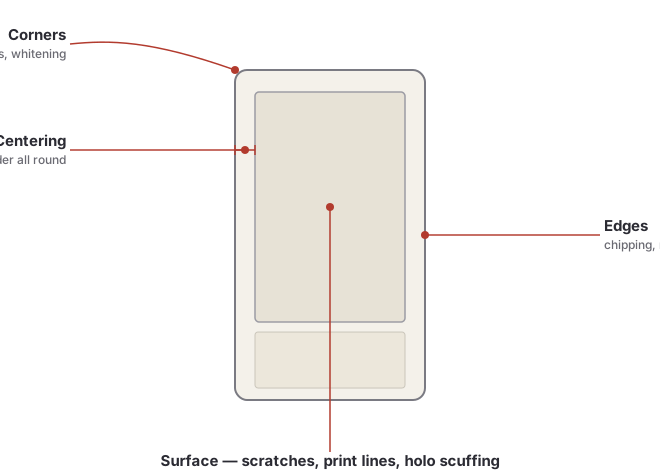
- 1CenteringHow evenly the artwork sits inside the border, measured front and back as a ratio like 55/45. A perfectly centred card is 50/50. PSA 10 allows roughly 55/45 front / 75/25 back; BGS 10 is much stricter at ~50/50.
- 2CornersSharpness under magnification. Even a tiny amount of whitening or a soft, rounded point drops the grade. Vintage cards almost always lose points here.
- 3EdgesChipping, whitening and roughness along the four sides — most visible on dark-bordered cards. Factory cutting can leave one edge weaker than the others.
- 4SurfaceScratches, print lines, indentations, dimples, holo scuffing and any staining or fingerprints. Print defects from the factory count against surface too.
How centering is measured
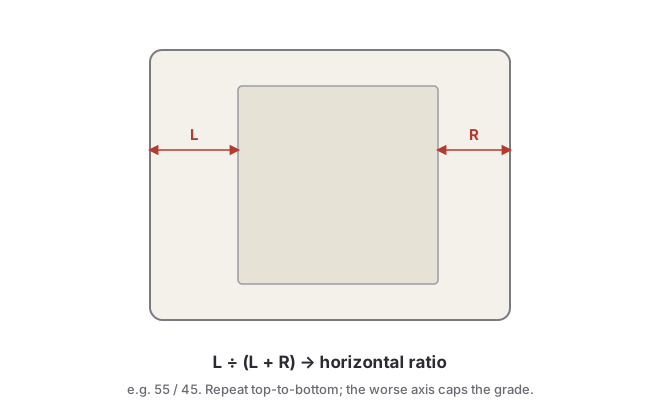
PokeHive’s Pre-Grader measures centering from a photo and tells you the highest PSA grade the centering alone would allow — before you spend a penny on submission.
The grading scales
| Grade | PSA | BGS (Beckett) | CGC |
|---|---|---|---|
| 10 | Gem Mint | Pristine 10 / Gem Mint 9.5 | Pristine 10 / Gem Mint 10 |
| 9 | Mint | Mint 9 | Mint 9 |
| 8 | NM–Mint | NM–Mint 8 | NM–Mint 8 |
| 7 | Near Mint | Near Mint 7 | Near Mint 7 |
| 5–6 | Excellent | Excellent | Excellent |
| 3–4 | Very Good | Very Good | Very Good |
| 1–2 | Poor / Fair | Poor / Fair | Poor / Fair |
PSA gives one whole number (a half-point “Authentic” aside). Beckett gives a headline grade plus the four sub-grades and reserves “Black Label 10” for a card that is a flawless 10 in all four. CGC sits between the two and calls a perfect card “Pristine 10”.
What the submission process looks like
- 1Pick a tierCompanies price by the card’s declared value and how fast you want it back. Cheaper “bulk” tiers can take months; express tiers cost many times more.
- 2Prep & protectEach card goes in a fresh penny sleeve, then a semi-rigid holder (Card Saver I). Never send cards in top-loaders or taped shut.
- 3Fill in the submissionList every card with its set, number and declared value online, print the form, and pack it with the cards.
- 4Ship insuredUse a trackable, insured service. The grader logs the cards in on arrival and you can follow each step in your account.
- 5Grading & slabbingGraders inspect under controlled light and magnification, assign the grade, encapsulate the card and return it.
Declared value matters: it sets the tier price and the insurance cap. Under-declaring to save money means you’re under-insured if the package is lost.
Is it worth grading a given card?
Grade a card when the expected graded price minus the grading fee, shipping and the risk of a low grade still leaves you ahead — or when you simply want it protected. As a rough guide: modern bulk rares are rarely worth it, mid-value holos need a confident Mint-or-better card, and only genuine chase cards justify an express tier. Check recent sold prices for the exact card in PSA 9 and PSA 10 before deciding.
- Does grading make a card authentic?
- Graders do authenticate as part of the process and will flag trimmed, re-coloured or counterfeit cards, but the main product is the condition grade.
- Can I crack a slab and re-submit?
- Yes — people “crossover” between companies or resubmit hoping for a bump. You pay the full fee again and risk a lower grade.
- Why did my Mint-looking card only get a 9?
- Almost always centering or a single soft corner you can’t see without a loupe. Surface print lines on holos are another common culprit.
- PSA vs BGS vs CGC — which is best?
- PSA slabs generally command the highest resale prices for Pokémon; BGS is prized for its sub-grades and Black Label; CGC is often cheaper and faster. Pick based on the card and your goal.